


March Into Savings This Spring!
Members today are facing real economic pressures, and we know higher costs can make it feel like there’s little room to breathe. While no single change fixes everything, small seasonal adjustments can add up and help keep a little more money in your pocket. As we move into spring and enjoy warmer days and longer daylight, the steps below offer simple ways to save energy now and reduce costs over time.
Spring Clean HVAC Filters
Start spring by cleaning or replacing HVAC air filters to prepare for summer. The filters in your furnace and air conditioners are designed to prevent dirt, dust and other air pollutants from recycling through your home. Once a filter becomes clogged with debris, it requires more energy to run your HVAC system. Check each filter every two months by holding it up to a light source and changing it if the light does not pass through.
Let The Light In
As we transition into spring, open the curtains, shades and blinds during the day to heat your home naturally and reduce artificial lighting. Inviting the sun in can save 2-12% off your energy bill. In the summer, however, you need to keep your blinds and shades closed to prevent warm air from building up in your home, causing your air conditioner to work harder.
Cool the Lights
Switch your home’s light bulbs to ENERGY STAR® certified LEDs. They last at least 25 times longer and consume up to 90% less electricity than incandescent bulbs. Because they produce less heat, your air conditioner does not have to work as hard or often.
Lower The Temperature
Water heaters are the second-highest energy thief in the home. Using an accurate thermometer, keeping the temperature setting at 120 degrees can trim 6% to 10% from your energy bill, depending on where the temperature was originally set. Never set the temperature below 120 degrees because it allows dangerous, unhealthy organisms to grow inside your water tank. Set your refrigerator to 37 degrees and your freezer to 3 degrees.
Unplug and Play
March 7 is the National Day of Unplugging — reduce "vampire" energy by unplugging idle devices. Many electronic devices continue to use a small amount of energy when connected to an outlet — even if they are not being actively used.
Unplugging electronics or using a power strip to deenergize things like televisions, stereos, computers and appliances will save you money immediately and over time.
Air-dry Dishes
To save work, water and energy, run full loads and only pre-rinse if dishes are going to stand unwashed for more than a few hours. To save even more energy and money, switch off the dishwasher's heat-dry cycle.
Fan Friendly
Switch your ceiling fan to run counterclockwise to create a cooling breeze. Fans can make a room feel as much as 3 degrees cooler, allowing you to increase the thermostat temperature setting, and lower overall energy consumption.
Spring Clean Your Laundry
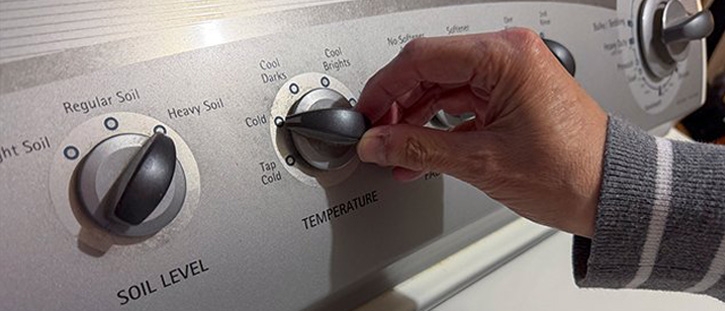
Wash clothes in cold water and air-dry them as the weather gets warmer. ENERGY STAR® says that nearly 90% of the energy consumed by a washing machine is due to heating consumed by a washing machine is due to heating modern soaps are designed to work well at lower temperatures. If you use the clothes dryer, clean the lint trap with every use to maintain energy efficiency.
Smaller is Better
For cooking or heating small amounts of food, use a smaller appliance (e.g. microwave or toaster oven) to save energy by 50% compared to heating or broiling in an oven.
Grill and Chill
Celebrate warmer weather by using an outdoor grill instead of the oven to save energy. This will give your air conditioner a break, translating into energy savings and less wear and tear on your unit.
